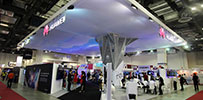
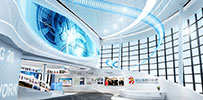

The relevant forms, colors, shadows, material texture factors in a exhibition space are the results of refactoring or creation a designer applied to the booth materials, all the while, the refactoring gives off much varied glamour, people would easily lost themselves in the experience where in a spatial bound there exists plentiful morphologies like bumps, wrinkles after we changed its shape targeting at material forms, colors and textures aspects. these differences in forms will attract you to stop to enjoy it, to face to touch it. Under these impacts, audiences would desire to try to create and reconstruct a art design by themselves and apply all these on the exhibition space, thus it managed to put the design into live applications.
How to update the materials features with creativities, how to translate all these traditional materials into formal exhibition concepts with accurate art representations to give birth to a wild fashion public design aesthetics, is the key issue a designer should take into their account, take the wire chain link, Corrugated tin clip which once be considered as coarse and graceless for example, when it was imported into regular exhibitions and after been reconstructed it just shows no prejudices to the its former sanctities. Cause the designers can analyze the fashion forms accepted by the public with special techniques, apply it to them as the new energy and new inspirations according to the original sociology and aesthetics relations, The exhibition experts re-combine the materials with sufficient assists from tools and various others, control the light, space to fit the natural practical usages etc. thus always can outline the strong vital and strengthful effect, devote to output the natural and surprising impressions in vision.